Coffee Tours in Ethiopia
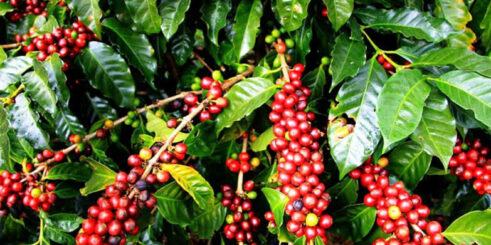
Coffee Tours in Ethiopia
Ethiopia and coffee – the history
Ethiopia is recognized as one of the twelve mega-centers of biodiversity and crop origin in the world.
Coffee is indigenous to Ethiopia, and was discovered some time in the 9th century CE, according to the legend, by a goat herder called Kaldi, who noticed that after his goats consumed a certain red berry, they became more frisky and active, and did not settle easily at night.
Kaldi shared this information with the monks at a nearby monastery, who found that consumption of these red beans helped them stay awake and concentrate during their nightly prayer sessions.
Knowledge about coffee’s qualities and how to prepare it spread east from where it was originally discovered in south west Ethiopia, until sometime in the 15th century it was taken by Arab traders to Yemen, which became a major coffee production center. From the Middle East coffee consumption spread to Europe in the late 16th and early 17th century – by the mid 17th century there were more than 300 coffee houses in London.
Eventually coffee cultivation spread east to Dutch colonies in Java and French colonies in Vietnam, and then across the Atlantic to the new world, to the Caribbean and the Americas.
But Ethiopian coffee retains a special cachet or status among all global brands, for its natural, organic quality and supreme taste.
Economic and social importance
Economically and socially, coffee is of enormous importance in Ethiopia today – over 25 million people (from a population of around 130 million) are engaged in or are dependent on the coffee sector for their livelihoods, while coffee accounts for about a third of export earnings. Between 90% and 95% of all coffee production is by the 4 to 5 million small scale farming households, who grow coffee as their primary cash crop. The remaining 5%-10% is produced on large plantations and state owned farms.
Half of all Ethiopian coffee production is consumed in-country – for Ethiopians coffee is not simply a beverage, but in its preparation and consumption it plays a key role in Ethiopian social life. The coffee ceremony, which is performed up to 3 times a day in some households, binds families, friends and neighborhoods together. Typically, grass is scattered on the floor around the place where the coffee is prepared, and incense is lit. The green coffee beans are washed, roasted on site in an open pan, which is then passed around the gathering for people to smell, and then ground with a mortar and brewed in a traditional clay pot called a jebena. It is served in small cups, with three brewing being made, the final brewing being called bereka, or blessing. Traditionally it is served with popcorn.
Key production areas
Coffee is grown in the East (around Harer), South (Sidama, Yirga Cheffe) in the southern highlands – this is Ethiopia’s largest coffee producing region, with Yirga Cheffe trademarked globally– Guji, south of Sidama, Jimma and Kaffa, the historical birthplace of Arabica coffee, and further west Limu, Babeka and Illubabor where there are large state farms.
Ethiopian Quadrants Coffee Tours
All of our tours begin with a city tour of Addis Ababa, to locate ourselves in the country, and a visit to a major coffee producer to see sorting, roasting and cupping processes first hand.
The major production areas are set in stunning scenery, all located in areas with moderate climates. On each tour we will visit local farms, and depending on the season there will be opportunities to see and participate in processes such as picking, washing, drying and roasting, and of course, cupping.
We will maximize the opportunities for social interactions with the host communities, through shared meals and cultural experiences, and exploration of local craft production.
And of course we will explore the local scenery and environment, with forest walks, and visits to local hot springs and waterfalls.
These tours are a sample of what is possible, we can easily tailor make tours, shortening or lengthening as required, and combine these tours with visits to other tourist sites and attractions in Ethiopia, such as the rock hewn churches of Lalibela, volcanoes in the Afar Region, or the diverse ethnic communities in the Omo Valley.
EQ CT 01: Addis Ababa, the Rift Valley, Sidama and Yirga Cheffe
This tour takes in premium coffee growing areas in southern Ethiopia
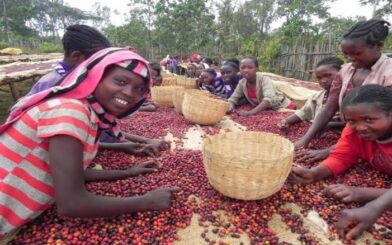
Day 1: Arrive Addis Ababa, short city tour and visit to a coffee producer’s facility to see sorting, roasting and cupping processes. o/n 4 Star Hotel in Addis Ababa
Day 2: Early start, drive south on the Expressway down the Rift Valley, lunch en route at Lake Zwai (Batu), arriving at our destination Aregash Lodge in Yirgalem late afternoon. o/n Aregash Lodge.
Day 3:Today we will visit organic farms in the area around Yirgalem, and through following the various processes of coffee production, learn how Sidama coffee has achieved global status. We will have lunch in the area, and spend the afternoon exploring local villages and communities, culture and crafts. o/n Aregash Lodge.
Day 4: Today we head south to Yirga Cheffe, sometimes described as the Champagne of Ethiopian coffees. We will visit local farms and cooperatives, and have lunch locally.
This afternoon before returning to Yirgalem we will visit the stelae field of Tutu Fela. The Gedeo zone around Dilla is home to more than 50 archaeological stelae fields – there are an estimated 10,000 stelae in the area, dating from the 9th century and later. In TutaFela there are some 300 stelae, most with human faces and forms, with others of phallic imagery.
Back in Yirgalem we will have a farewell dinner, before our departure the following day.o/n Aregash Lodge.
Day 5: We head off back to Addis Ababa, but will break our journey for a relaxing one night stay at Bishangari, an eco lodge located on the eastern shores of Lake Langano, which is crocodile and bilharzia free.
The eco-system on the eastern shores is more interesting and varied than the western, and there are more birds and wild life – the lodge backs on to a well preserved patch of tropical forest, with giant Podocarpus trees.
For the birders in our group, among the birds we can see are: Dark chanting Goshawks, African Fish Eagles, Hemprich’s and Von der Decken’s Hornbills, Cardinal Woodpeckers, White-bellied Go-away Bird, Red-billed and White-headed Buffalo Weavers, White-crowned Shrikes, Blue-naped Mouse birds, Little Bee-eaters, Mariqua sunbirds.
As for mammals, we can see: hippos, Colobus monkey, Anubis baboon, common warthogs, Bush duiker, spotted hyenas, White-tailed mongoose and Bush Babies.
We can spend the afternoon going for forest walks, or swimming in the lake. o/n Bishangari Lodge.
Day 6: After a leisurely breakfast, we set off mid morning back to Addis Ababa. We can take lunch en route, arriving mid to late afternoon. There will be time for souvenir shopping and we will have a farewell dinner with music and dancing from Ethiopia’s different regions. For those leaving tonight, we can arrange day rooms for showering and changing clothes. Most international flights depart in the early hours of the morning, so we will transfer to the airport at around 22.00
Day 7: Final departure at around 0100 to 0200.
EQ CT 02: Addis Ababa, Jimma, Bonga
Jimma is a key commercial hub in south western Ethiopia, while Bonga in Kafa is located in the UNESCO Kafa Biosphere Reserve, birth place of Arabica coffee.
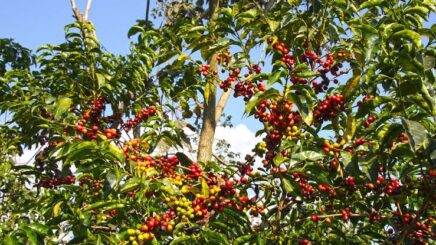
Day 1: Arrive Addis Ababa, short city tour and visit to a coffee producer’s facility to see sorting, roasting and cupping processes. o/n 4 Star Hotel in Addis Ababa
Day 2: After breakfast we transfer to the airport around 0930 for ET 275 1110 flight to Jimma, arriving at 1215. We transfer to our hotel, the Haile Resort, and after lunch in the hotel we begin our tour with a visit to the Jimma Agricultural Research Centre, which will provide us with a good introduction into all aspects of coffee production in the area, and we will then proceed to visit local coffee farms. o/n Haile Resort.
Day 3: Before leaving Jimma we will visit the recently restored palace of Abba Jiffar II, the last independent ruler of Kafa, and then continue to Bonga, a distance of just over 100 km, or a two hour drive.
After lunch in our hotel, we will visit local coffee farms and local markets.o/nLewi Resort.
Day 4: Today we will visit Mankira, a dense wild coffee forest, which is revered as the historic birthplace of Arabica coffee, and the place where Kaldi made his discovery. A 40 minute trip by car takes us to where we start out trek – which will take us 3 hours for the round trip – through pristine forest, where we can see the moss covered “mother trees” – the oldest wild coffee trees in existence.
En route we will see wild coffee cherries dried naturally by farmers, and traditional honey farms.
In the area there are historical and natural attractions, such as the Adaracha Medhanealem Church, an ancient and historically significant Orthodox church, the Gurguto Natural Bridge, known locally as the Bridge of God, a natural rock bridge spanning across a river that connects two distant villages, and the Barta Waterfall, just 2km walk from Bonga.
We will take a picnic lunch, returning to Bonga mid afternoon. o/n at Lewi Resort.
Day 5: After breakfast we set off back to Jimma, to catch the 1325 flight back to Addis Ababa, arriving at 1430. There will be time for souvenir shopping and we will have a farewell dinner with music and dancing from Ethiopia’s different regions. For those leaving tonight, we can arrange day rooms for showering and changing clothes. Most international flights depart in the early hours of the morning, so we will transfer to the airport at around 22.00
Day 6: Final departure at around 0100 to 0200.
NB For visitors who would like to combine visits to Sidama and Yirga Cheffe with the tours to Jimma and Bonga, it can easily be arranged but will involve a one and a half day road transfer via Sodo and Chebera Churchura Park, a chance to see forest elephants.
EQ CT 03: Addis Ababa and Harer
Harer, one of Ethiopia’s 12 regional states, has enormous historical and cultural significance, with its 82 mosques, it is said to be the fourth holiest place in Islam, after Mecca, Medina and Jerusalem, and the region is where the world’s first commercial coffee farms were planted by Arabian traders, sometime around the 10th Century.Unlike washed coffees from regions like Yirga cheffe, Harar beans are sun-dried with the fruit of the cherry still attached. This dry-processing method gives the coffee a remarkably heavy body.
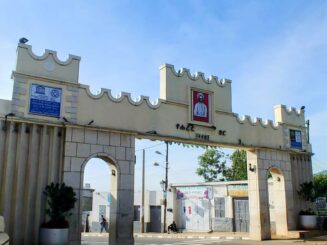
Day 1: Arrive Addis Ababa, short city tour and visit to a coffee producer’s facility to see sorting, roasting and cupping processes. o/n 4 Star Hotel in Addis Ababa
Day 2: After breakfast we transfer to the airport at around 10.30 for the 12.10 flight to Dire Dawa, arriving 13.25. Dire Dawa is one of two Chartered Cities in Ethiopia, the other being Addis Ababa. We will take lunch at the famous Paradiso Restaurant, before continuing on our journey to Harar. Because of road congestion, the 70 km journey can take up to 2 hours.
En route we will stop briefly at Awaday, the biggest chat market in the world, open 24 hours a day. Chat (qat, mirungi, mira’) is a mild stimulant, widely consumed in the Horn of Africa. From Awaday, chat is sent out to different parts of Ethiopia and to neighboring countries – daily sales are about 25,000 kg.
On arrival in Harer we check into our hotel and can start our introduction to Harer with a visit to the Arthur Rimbaud Cultural Centre.
This evening we will go to the city walls to see the “Hyena Man” feed the hyenas who gather nightly outside the town – a procedure in which visitors can also participate! o/n Ras Hotel (For smaller groups, it is possible to rent rooms in a traditional Hareri house, inside the UNESCO jegol, or walled city.)
Day 3: We will spend today exploring Harer, visiting the Islamic and Christian markets, a traditional Hareri house, the National and Hareri museums, the house of Ras Mekonnen (the father of Haile Selassie), and stroll around inside the jegol, or old walled city. o/n Ras Hotel.
Day 4: This morning we will go outside the city to visit some small, local coffee farms, and the Argoba villages. The Argoba claim descent from the first Muslim refugees who came to Ethiopia fleeing persecution in Mecca, in the first quarter of the 7th century. We can have a picnic lunch, returning to Harer early afternoon. The rest of today at leisure, to sit out in the gardens of the hotel, or to wander around the narrow lanes of the jegol, sampling coffee at the various small sralls.o/n Ras Hotel.
Day 5: We leave after breakfast on our journey back to Addis Ababa. We will have time to explore Dire Dawa, visiting the colonial quarter, or Kezira, which was constructed to house the engineers and administrators of the Djibouti Addis Ababa railway, with wide, tree lined streets, and the Megala, or old town, and the popular Kefira Market. We will have an early lunch at Paradiso, before transferring to the airport for the 1505 flight to Addis Ababa, arriving 1610. There will be time for souvenir shopping and we will have a farewell dinner with music and dancing from Ethiopia’s different regions. For those leaving tonight, we can arrange day rooms for showering and changing clothes. Most international flights depart in the early hours of the morning, so we will transfer to the airport at around 22.00
Day 6: Final departure at around 0100 to 0200.